
VLBI in Australia
Discover how Australia contributes to global VLBI with radio telescopes and compute power.
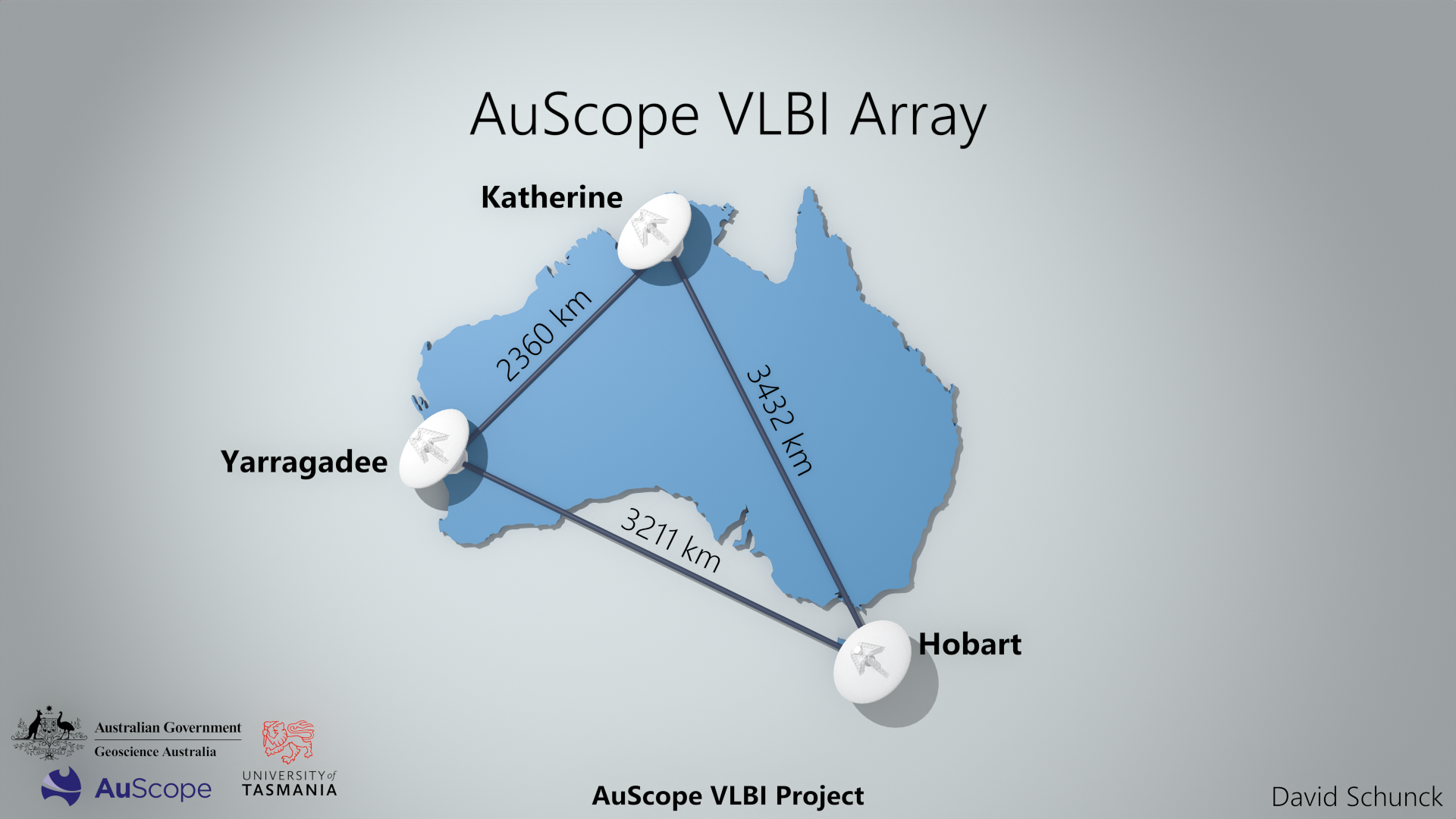
The VLBI technique benefits from a homogeneous distribution of radio telescopes around the globe. This is what makes Australia so significant. At present, Australia contributes to the newest generation global network of VLBI radio telescopes with three of the five available telescopes in the Southern Hemisphere. These three stations form the AuScope VLBI Array. The Hobart telescope is located in Tasmania, the Katherine telescope in the Northern Territory, and the Yarragadee telescope in Western Australia. Together, the array forms baselines ranging from about 2,300 to 3,400 kilometres in length.
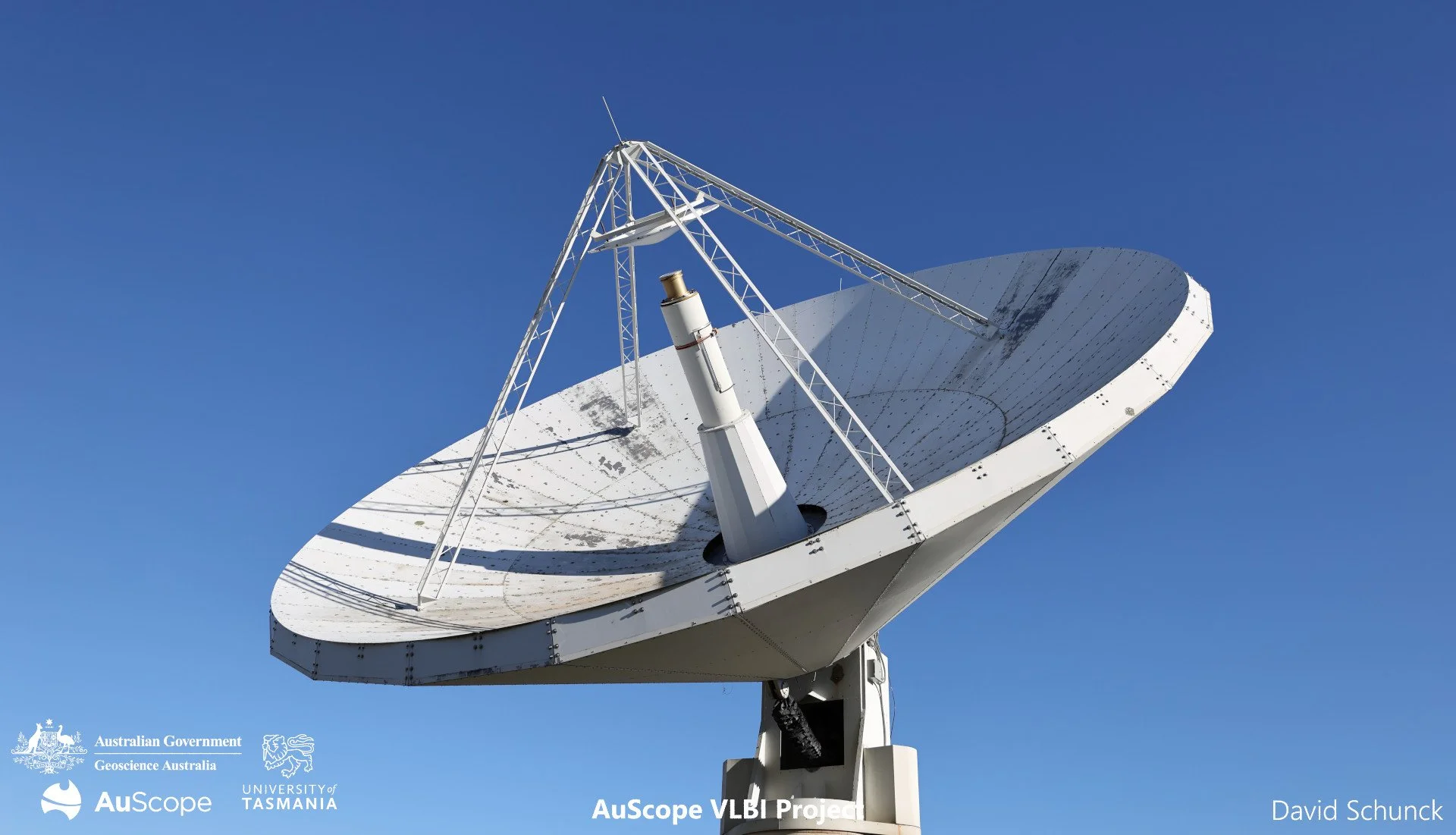
Shown here is the upper part of the Hobart 12-metre radio telescope at the Mount Pleasant Radio Observatory near Hobart. The radio telescopes in Katherine and Yarragadee are identical.
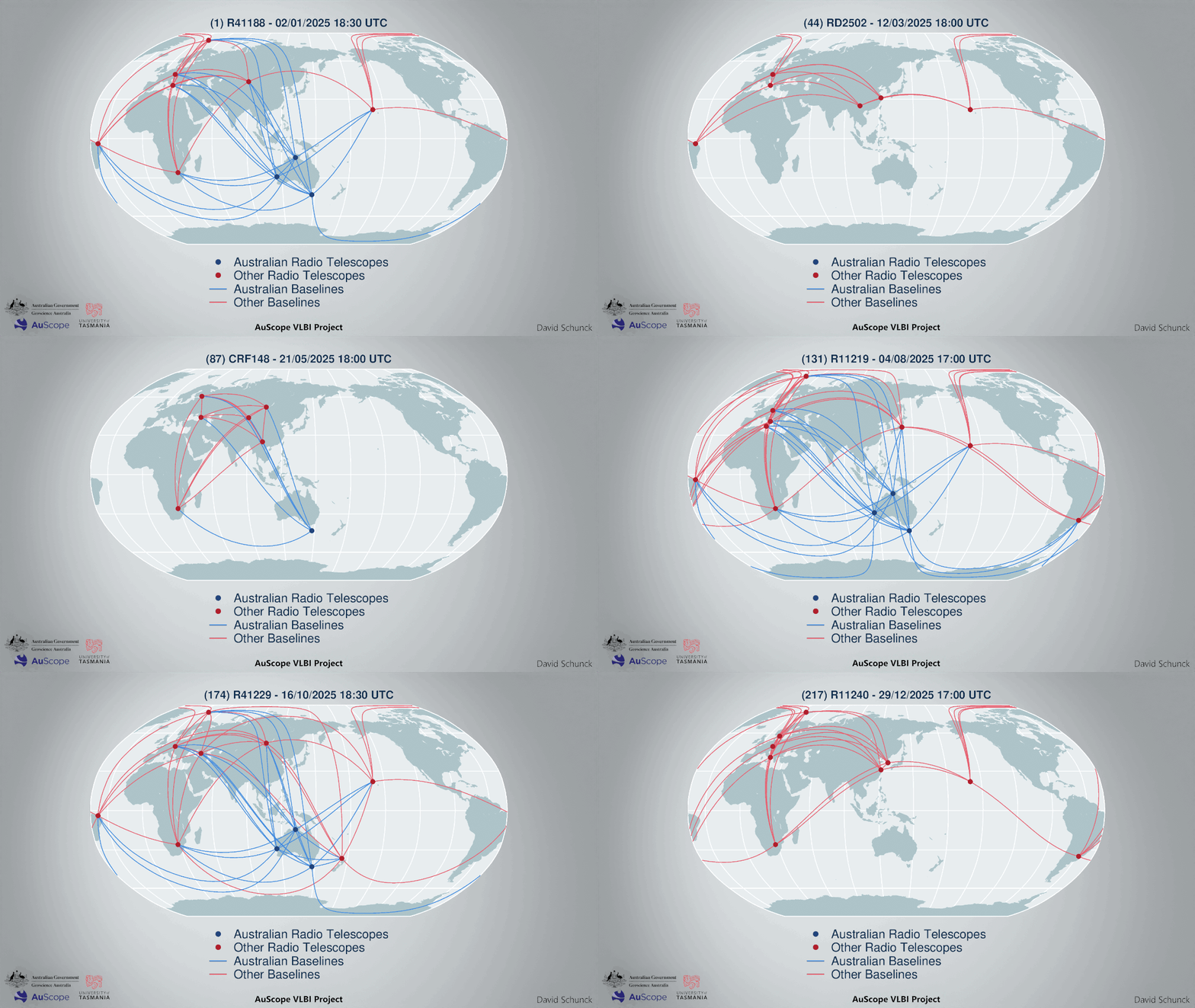
Radio telescopes typically operate in 24-hour observing sessions. Several such sessions are conducted each week. This graphic shows all VLBI experiments scheduled for 2025. Blue dots and lines represent Australian radio telescopes and the baselines that include at least one Australian telescope. In 2025, Australian VLBI telescopes participate in 192 of the 217 global experiments - about 90%.
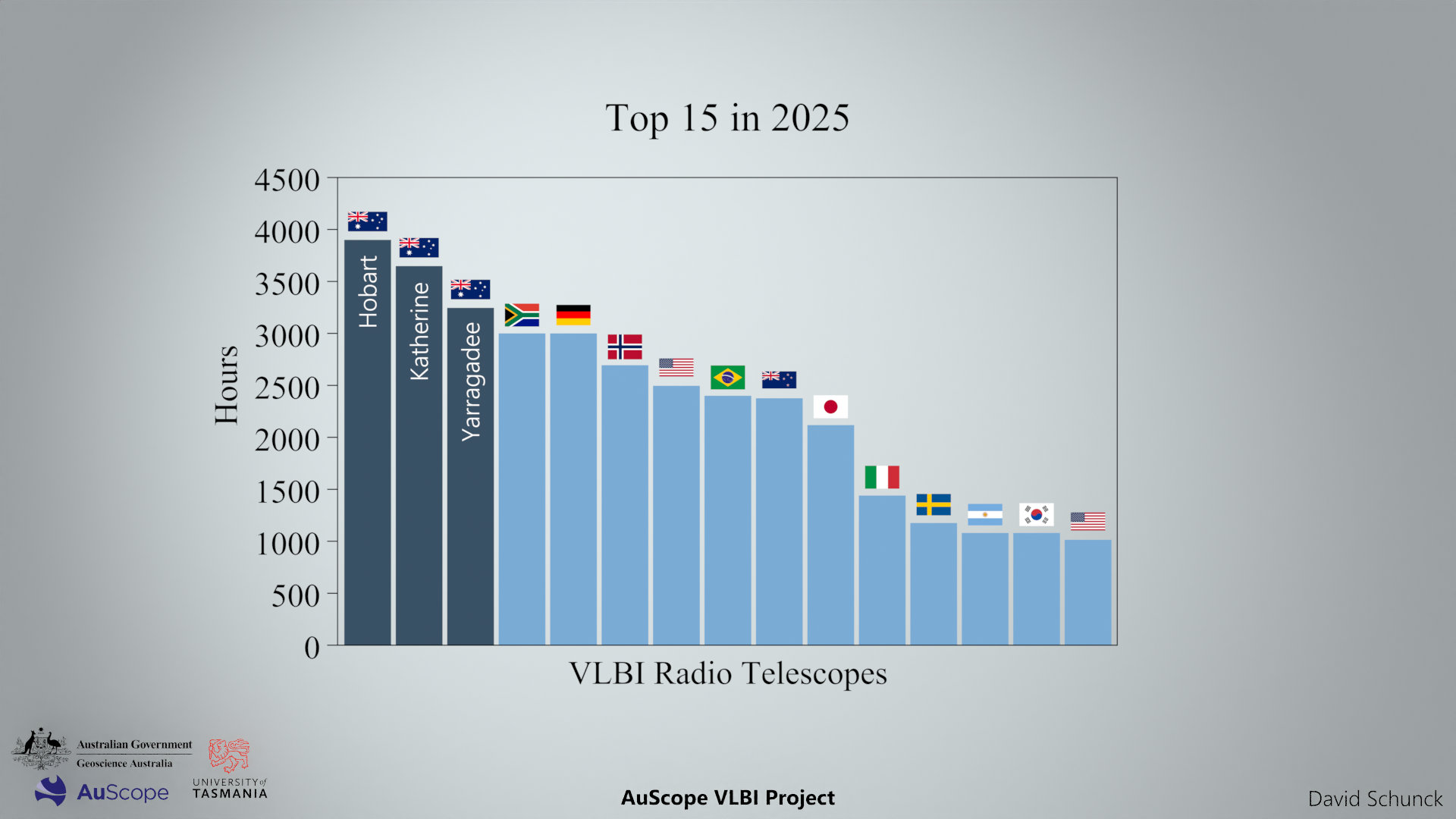
This chart shows the top 15 radio telescopes ranked by total observing time in hours in 2025. The three Australian radio telescopes - Hobart, Katherine, and Yarragadee - occupy the top three positions, each with between 3,000 and 4,000 hours of observations.
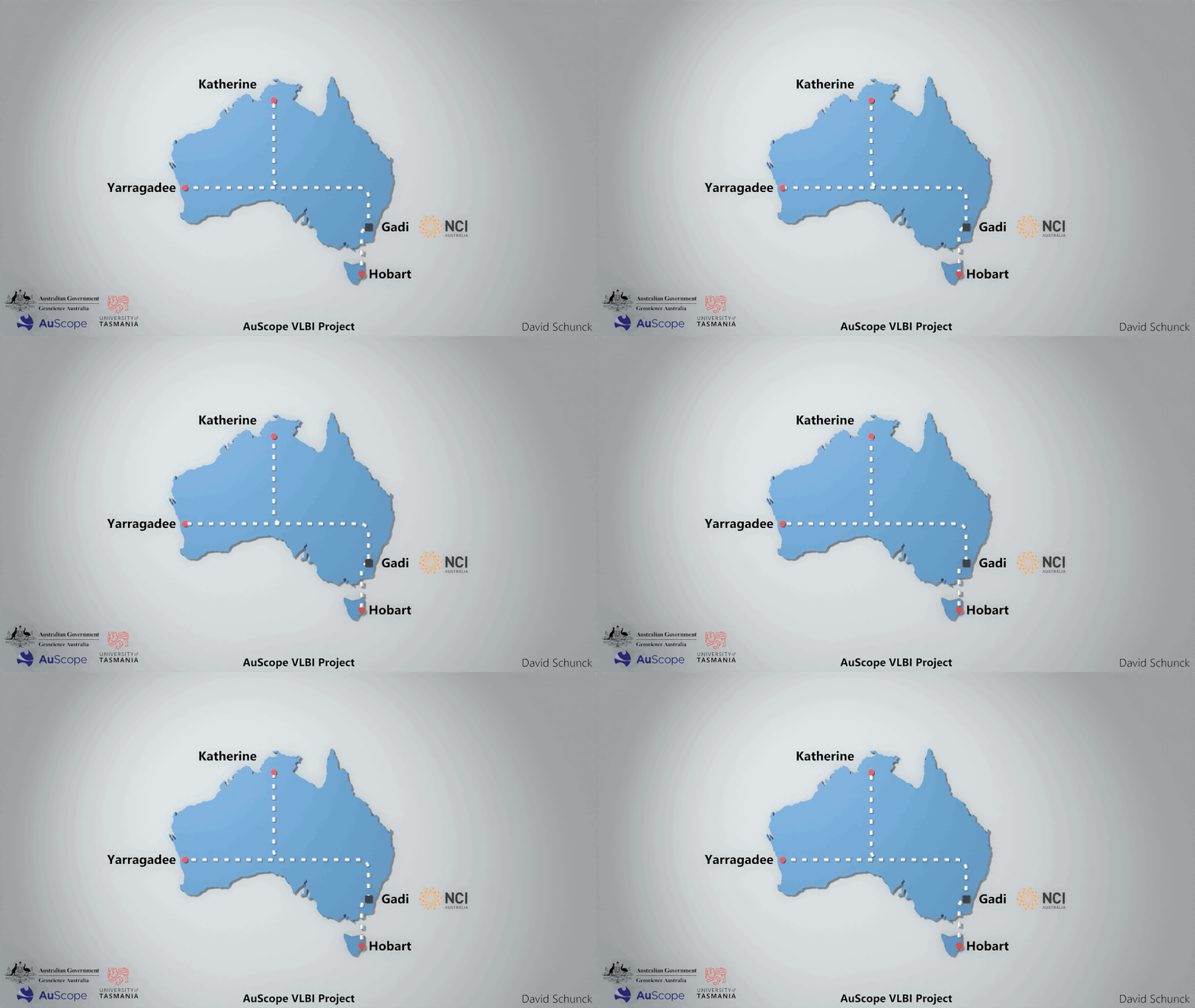
In addition to providing observations, Australia is also establishing its own VLBI correlator. At the end of each 24-hour observing session, Australian and international radio telescopes send their data packages to the high-performance supercomputer Gadi in Canberra.
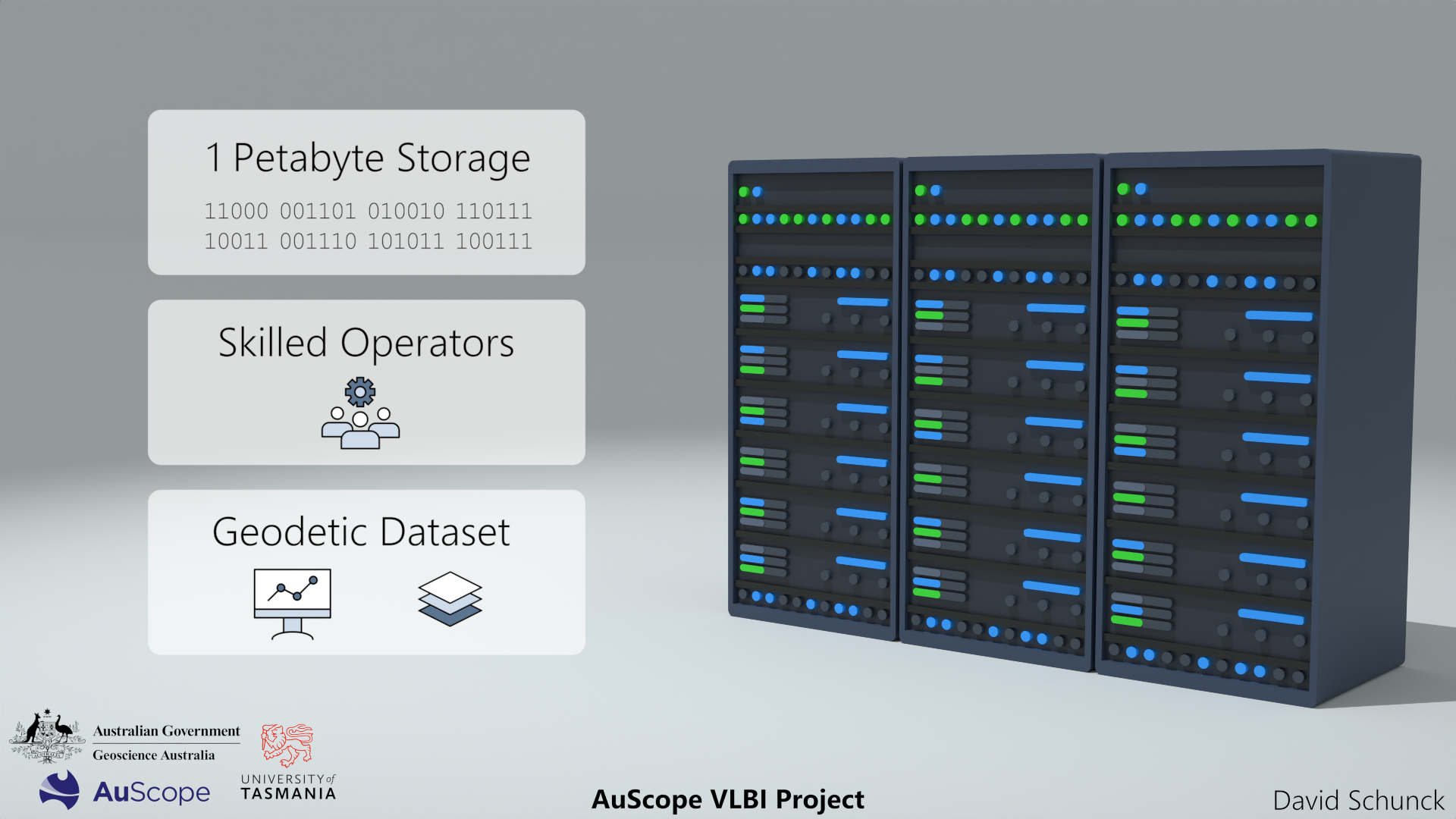
Gadi is part of the National Computational Infrastructure (NCI) of Australia. Up to one petabyte of data is allocated for VLBI data processing. A skilled team of operators manages the processing of these data. The result is a geodetic dataset, which is then used for further scientific analysis.
This experimental AuScope science communication project was conducted in collaboration with Geoscience Australia and the University of Tasmania (UTAS).
It has been designed, created and produced by Dr David Schunck and Dr Lucia McCallum from the geodetic VLBI research group at the University of Tasmania.
All graphics and animations on this website may be used freely for educational and non-commercial purposes with appropriate attribution.