

Radio Sources in Space
Learn about the radio beacons that make high-precision Earth measurements possible.
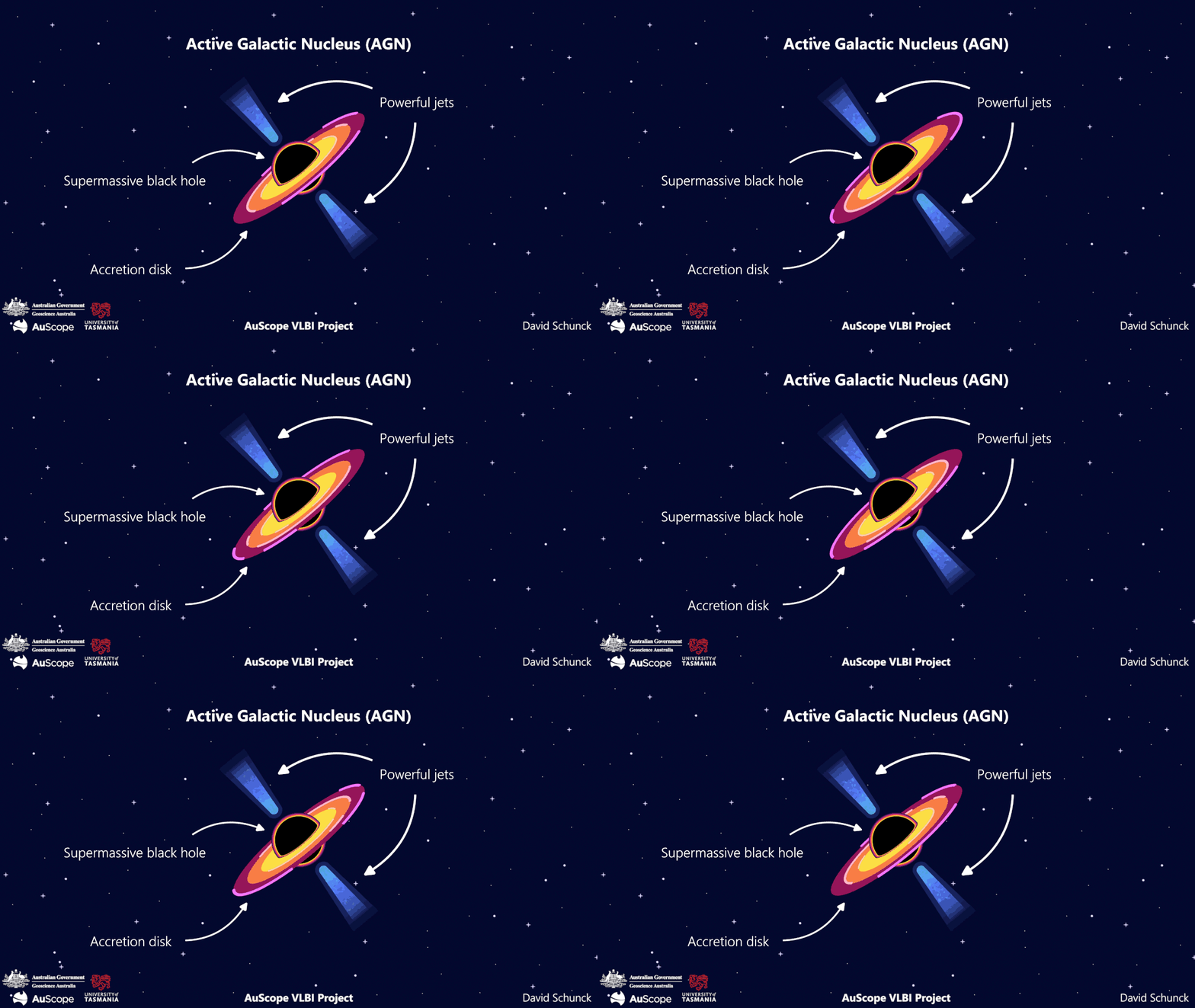
An active galactic nucleus (AGN) is the bright central region of a galaxy powered by a supermassive black hole that pulls in surrounding gas and dust. As this material spirals inward, it forms an accretion disk that heats up and emits intense radiation across the spectrum. Some AGNs launch powerful relativistic jets perpendicular to the disk, shooting out particles. The synchrotron radiation from these jets is what we detect with radio telescopes in VLBI observations. The AGNs we observe with VLBI are extremely distant, typically billions of light-years away. This means the radio waves we detect today left those objects billions of years ago, letting us see them as they were when the universe was much younger. The International Celestial Reference Frame (ICRF) contains precise coordinates of extragalactic radio sources observed with the VLBI technique.
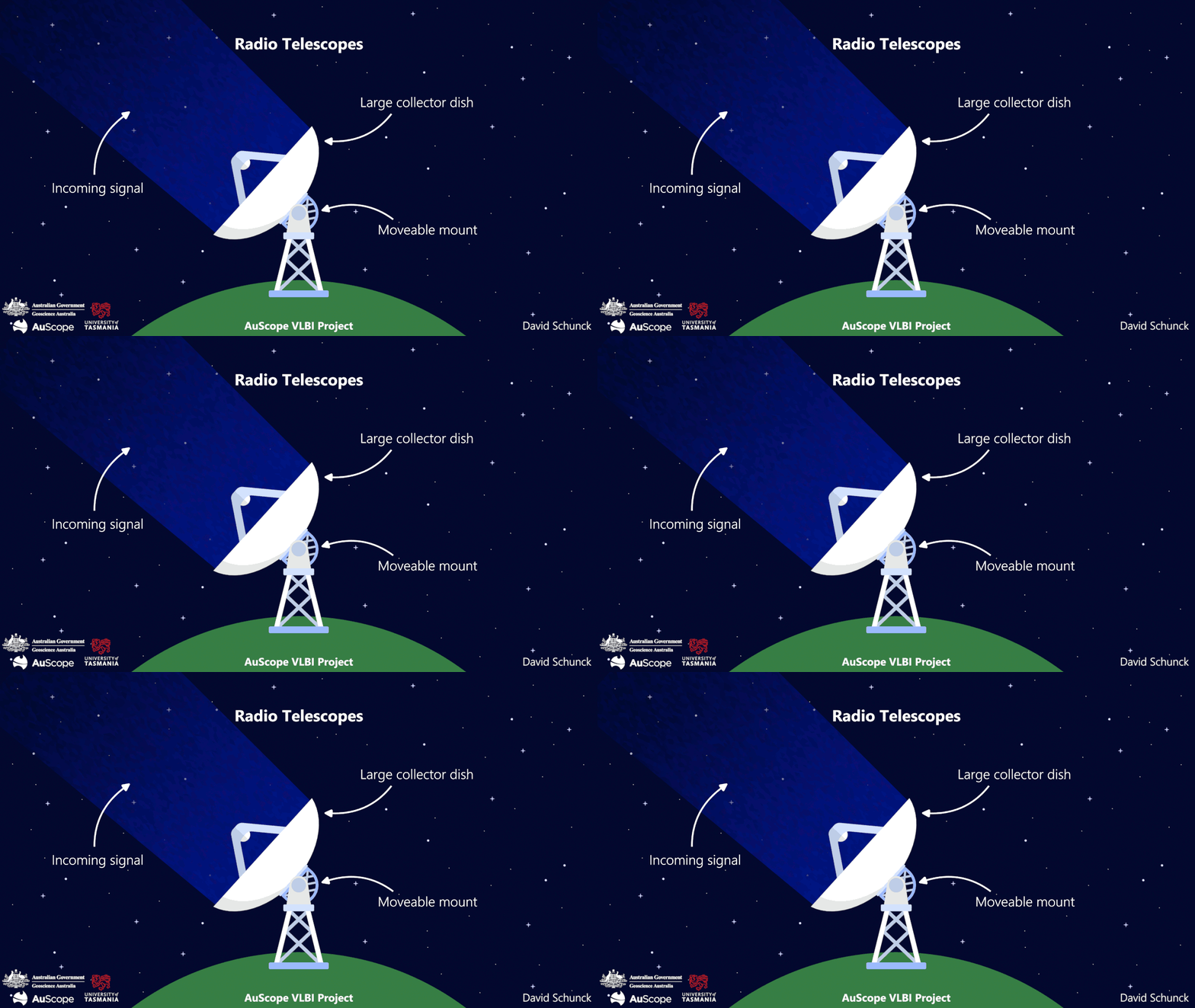
Radio telescopes receive the extremely weak incoming signals. A mobile phone on the moon would transmit a stronger signal than a typical AGN does to Earth. A large collector dish focuses the radio waves onto a sensitive receiver. The entire antenna sits on a moveable mount, allowing it to track radio sources as the Earth rotates. A large network of radio telescopes participate in regular observing sessions.
This experimental AuScope science communication project was conducted in collaboration with Geoscience Australia and the University of Tasmania (UTAS).
It has been designed, created and produced by Dr David Schunck and Dr Lucia McCallum from the geodetic VLBI research group at the University of Tasmania.
All graphics and animations on this website may be used freely for educational and non-commercial purposes with appropriate attribution.